
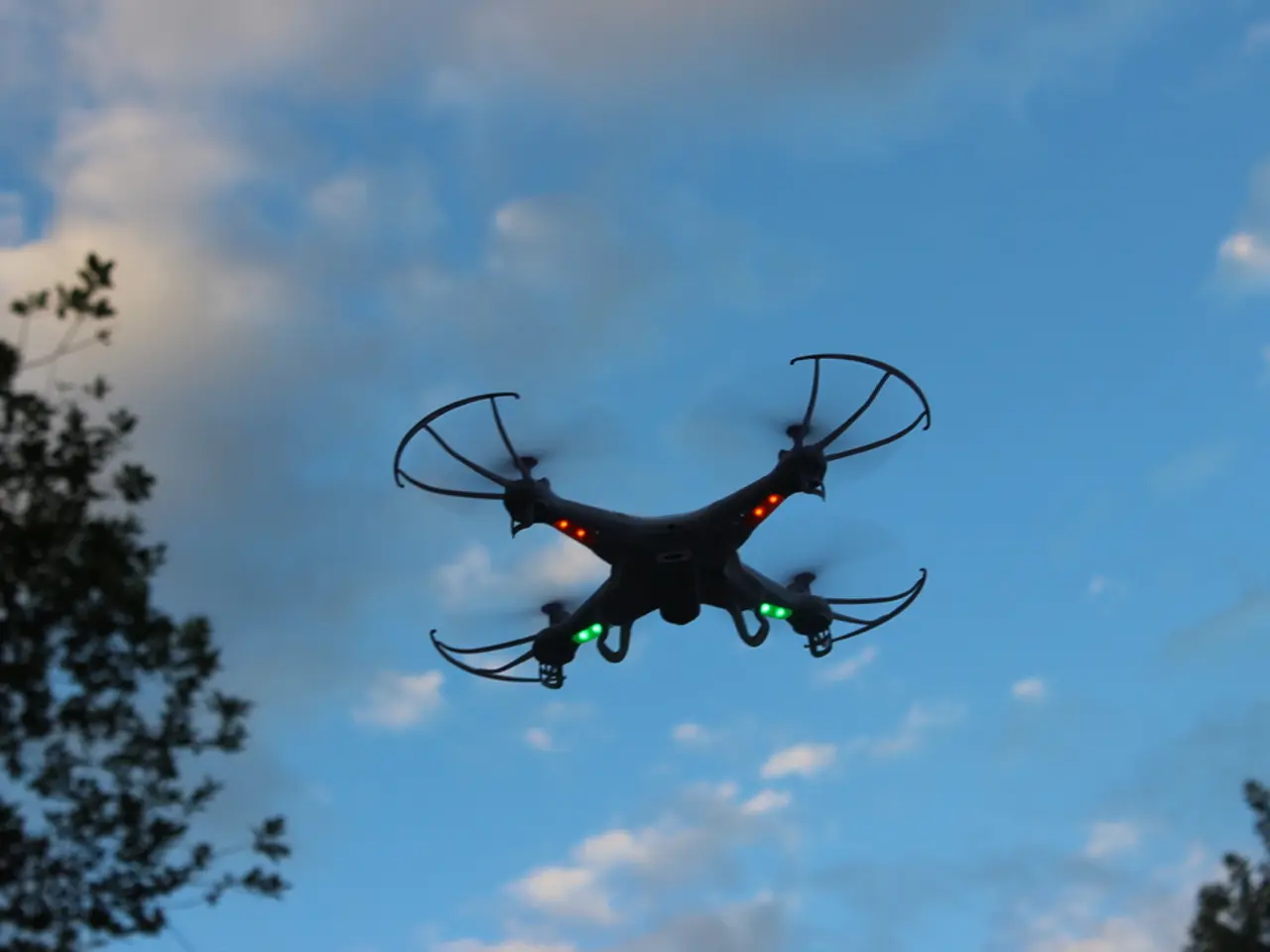
Exploring Drone Software: Characteristics, Applications, and Future Developments (2025)
In the rapidly evolving world of drone technology, the focus is increasingly shifting towards advanced drone software. FlyEye is set to launch a new suite of software solutions, aiming to streamline inspections and flight planning for professionals. This article explores the key trends and developments shaping the drone software landscape in 2025.
AI and Autonomy
Artificial intelligence (AI) is playing a pivotal role in enhancing drone autonomy. With AI, drones can navigate, avoid obstacles, and make real-time decisions with minimal human intervention. This boosts efficiency in various sectors, such as logistics, agriculture, infrastructure inspection, public safety, and disaster response.
Multi-Sensor Payloads and Imaging
Modern drones are increasingly equipped with multiple sensors simultaneously—visible light cameras, thermal imagers, LiDAR—to gather diverse data in a single flight. This capability is invaluable for applications such as crop analysis, environmental mapping, and surveillance.
Advanced Analytics Platforms
Cloud-based and integrated software solutions like Pix4Dinspect offer powerful data analytics and management capabilities, facilitating photogrammetry and inspection tasks with actionable insights.
Modular Open Systems
Enterprise drones emphasize modularity, allowing users to customize payloads and integrate third-party software beyond proprietary ecosystems. This flexibility addresses varied mission needs and enhances software adaptability.
Automated Fleet and Workflow Management
New platforms include capabilities for automated drone fleet management, inspection-specific flight modes, and integration into broader operational workflows, increasing scale and operational control.
Regulatory Progress and BVLOS Operations
Shifts in regulations permitting Beyond Visual Line of Sight (BVLOS) flights are expanding drone applications significantly. However, national security considerations influence drone sourcing and technologies.
Market Growth Driven by Sustainability and Security
Investment in drone software aligns with trends towards data security, sustainability (e.g., carbon credit monitoring), and expanding commercial use. The global drone market is projected to surpass $54 billion in 2025 and continue strong growth through 2029.
Enhanced Battery and Propulsion Integration
Although primarily hardware, advancements in battery and propulsion integration impact software controlling flight duration and payload capacity, extending operational capabilities.
The Drone Software Landscape
The drone software landscape includes cloud-based platforms, desktop suites for data processing, and open-source and custom solutions. Drone software can be installed on mobile devices, desktop systems, or accessed through cloud-based portals.
UgCS, for instance, offers precise terrain-following, waypoint automation, and LiDAR compatibility, favored by technical users, research teams, and surveyors who require high control over flight paths in complex environments.
Drone software is used across sectors such as Construction & Infrastructure, Agriculture, Public Safety, Film & Media, and Environmental Monitoring. Many apps offer offline modes for mission execution and post-flight syncing, but cloud tools require internet access.
Most major drone software platforms support DJI systems. Open-source tools like QGroundControl and Mission Planner are free, though they may lack integrated compliance features. DroneDeploy is dominant in the mapping space, providing robust photogrammetry, real-time annotations, and AI-based analysis, ideal for construction, agriculture, and energy operators.
Choosing the Right Software
To choose the right software, consider your mission type, team size, and compliance needs. For professional drone pilots and small teams, DroneDesk offers a seamless workflow combining flight planning, airspace checks, asset tracking, and regulatory compliance.
In conclusion, the drone software ecosystem is maturing, increasingly defined by AI integration, interoperability, intelligent data processing, and regulatory alignment. This enables drones to operate more autonomously, safely, and efficiently across diverse industries in 2025.
Machine learning algorithms are being integrated into drone software to enhance automation, allowing for real-time decision making and increased efficiency in various sectors such as cybersecurity.
The advancement of technology in the field of drone software is not limited to improved flight planning and inspections; it also includes the development of cybersecurity measures to protect drone operations from cyber threats.




)