
Is the Concept of Space Tourism Attainable During Our Lifetime a Reality?
In the past 30 years, over 3,500 dust explosions have occurred, and the number of incidents appears to be on the rise, particularly in 2019. Meanwhile, a new frontier for humanity is taking shape – space tourism.
The potential for space tourism to contribute significantly to the global economy is undeniable. Whether through private enterprise or public initiative, the effort to make space tourism a reality will redefine the notion of venturing into space for leisure, making it an exciting and attainable opportunity for many. However, several challenges must be overcome to ensure the economic feasibility of this burgeoning industry.
High costs, safety risks, market accessibility, sustainability, and regulatory complexities are the primary hurdles for space tourism's economic viability. The enormous costs associated with spacecraft development, operation, and safety measures limit access mostly to affluent individuals. The inherent dangers and technical challenges of space travel raise concerns about passenger safety, impacting consumer confidence and regulatory approvals. Due to high price points and limited infrastructure, space tourism remains a niche luxury market rather than a mass-market industry.
The environmental effects of frequent rocket launches and space debris generate pressure to develop more sustainable technologies and practices. Emerging space tourism demands new regulatory frameworks and supply chain adaptations for aerospace firms, complicating industry growth.
However, there are promising solutions to improve economic feasibility. Ongoing improvements in reusable rocket technology and spacecraft efficiency are driving down costs and increasing flight frequency, making space more accessible. Developing diverse offerings such as suborbital flights, extended orbital stays, space hotels, lunar tourism, and high-altitude near-space experiences can broaden the customer base and revenue streams.
Increasing investment by private companies like SpaceX, Blue Origin, and Virgin Galactic fuels innovation, infrastructure development, and competitive pricing, accelerating market maturation. Efforts to address and reduce environmental impact, including sustainable propulsion and space debris management, are crucial for long-term viability. Continuous advancements in safety protocols and technologies can boost customer confidence and regulatory approval, facilitating industry expansion.
Achieving space tourism in our lifetime will redefine what it means to travel and pave the way for generations to explore beyond our planet. The advances in technology and economics indicate a promising future for space tourism. The aerospace industry's innovations, such as reusable rocket technology, are making space travel progressively more feasible and affordable.
The vision for space tourism includes not only travel to Earth's orbit but also potential journeys to the Moon, Mars, and beyond, with space habitations and interplanetary travel as long-term possibilities. Governmental support and international cooperation are crucial in advancing space tourism, as they can help overcome economic and technical barriers through regulations and research funding.
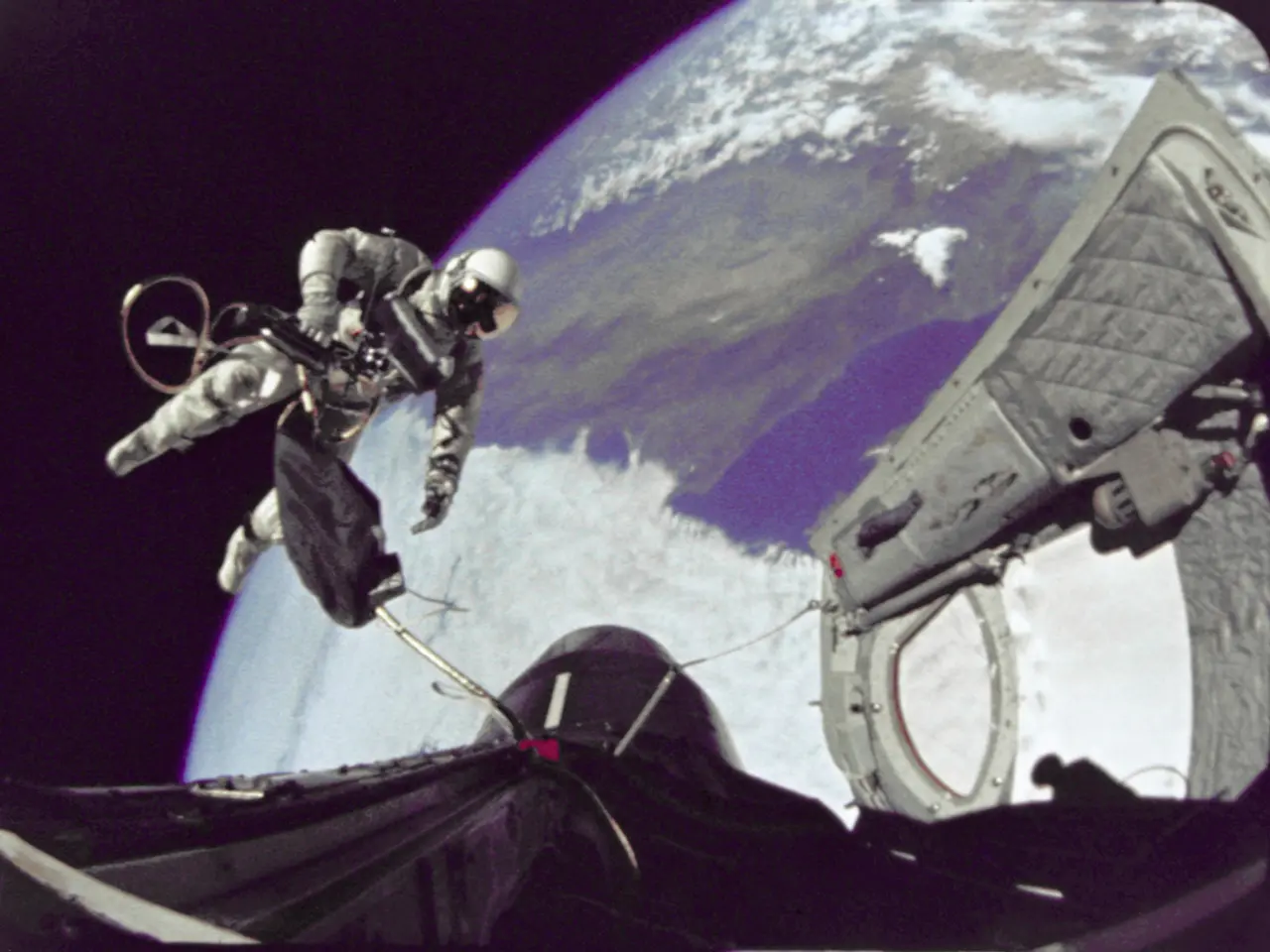
NASA, at the forefront of space missions since 1965, continues to play a vital role in space exploration. Each mission requires substantial investment in technological innovation and resources, making space exploration a challenging and costly venture. The concept of space tourism is set to expand the landscape of tourism into space, marking a milestone for humanity as a whole.
In conclusion, while space tourism currently faces significant economic and operational barriers, rapid technological progress, broader service offerings, private sector investment, and sustainability initiatives signal a promising path toward greater economic feasibility and market growth over the coming decade.
- The expansive realm of space tourism, propelled by technological advancements in reusable rocket technology and satellite-based internet, promises to bring the elegance of science to the masses, revolutionizing the concept of global connectivity.
- As we harness the power of space technology to push the boundaries of space exploration, the fusion of leisure with the final frontier—space-and-astronomy—may transform our understanding of science, enriching our lives and opening up new possibilities for a technologically driven future.