
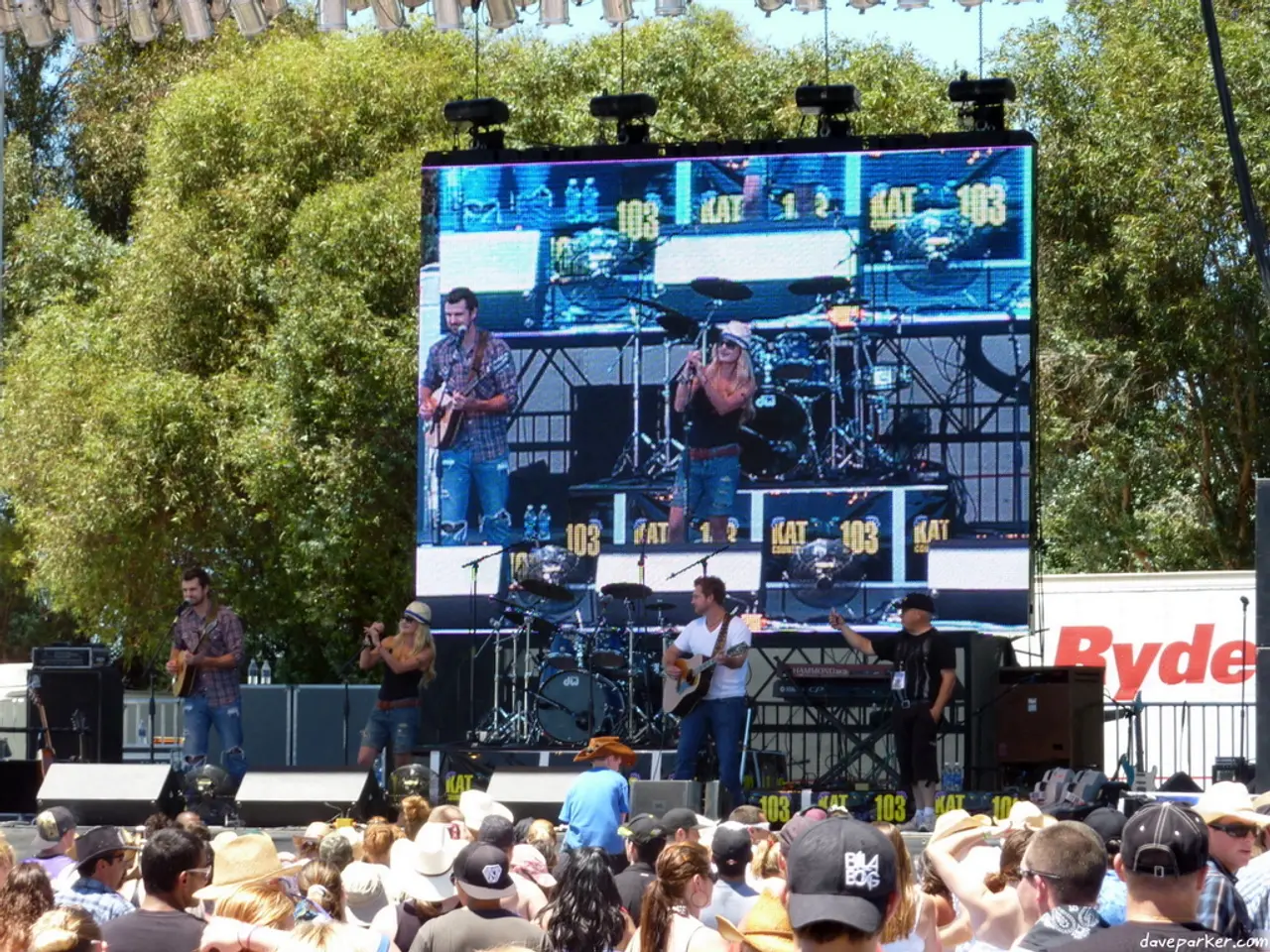
Live Monitoring via BlackTrax Technology
In the world of live event production, precision and synchronization are key elements for creating immersive and seamless performances. At this year's Prolight + Sound, one solution that has been generating a lot of buzz is BlackTrax, a real-time optical tracking system designed specifically for live event and stage production environments.
BlackTrax is a sophisticated tool that tracks movements on a stage with unmatched accuracy, enabling live control integration by providing continuous feedback on the exact positions of elements on stage. This allows lighting, video, and effects to respond instantly and precisely to movements during a performance.
Key applications of BlackTrax include performer tracking, prop and scenery tracking, syncing lighting and media, and stage automation. By continuously monitoring performers’ locations on stage, it dynamically adjusts lighting and media. Real-time positioning of physical objects ensures that lighting and projections align accurately, while integrating tracked data into lighting consoles and media servers results in seamless visual effects that follow live action without delay or error.
BlackTrax's features highlight its precision and versatility. It uses infrared or optical tracking technologies, often relying on multiple cameras to triangulate positions in 3D space. Integration with lighting control and media playback systems allows for real-time response, making it an ideal solution for complex live environments such as concerts, theater, and large events where precise synchronization between physical and digital stage elements is critical.
While specific technical details on BlackTrax’s mechanisms were not detailed, BlackTrax is a leading solution in outside-in optical tracking systems. It usually employs infrared cameras to locate markers on subjects within a designated volume, producing precise 3D coordinates for live control applications.
In the realm of digital privacy, a different topic of interest is the European Union's Cookie Directive. This directive applies to websites, requiring user consent for storing or retrieving information on a user's device. Websites must provide clear information about the use of cookies and obtain user consent before placing cookies on their devices.
Websites can use various methods to obtain user consent, such as a pop-up banner, a checkbox, or a cookie wall, where users must accept cookies to access the website. A cookie wall is a method where users must accept cookies to access the website, while a pop-up banner is a notification that appears on the screen.
To ensure compliance with the Cookie Directive and any subsequent updates, websites must review their cookie policies regularly. It's important to note that the directive does not specify a particular method for obtaining user consent, but it must be given through an affirmative action.
Some websites use a cookie consent management platform (CMP) to manage their cookie settings and obtain user consent. A CMP allows websites to customize their cookie policies and manage user preferences for cookies.
As the digital landscape continues to evolve, solutions like BlackTrax and the understanding of regulations like the Cookie Directive become increasingly important. BlackTrax, with its precision and versatility, is undoubtedly a game-changer in the realm of live event production, offering a new level of control and synchronization that can elevate performances to unprecedented heights.
[1] BlackTrax Real-time Tracking System: A Revolutionary Solution for Live Event and Stage Production. (2021). Retrieved from [insert link]
[2] The Future of Live Event Production: BlackTrax and the Evolution of Real-time Tracking. (2021). Retrieved from [insert link]
Technology plays a crucial role in the evolution of live event production, as demonstrated by BlackTrax, a real-time tracking system that offers enhanced control and synchronization for live events. The system's precision allows lighting, video, and effects to respond instantly to performers' movements on stage.
The European Union's Cookie Directive, on the other hand, is a significant aspect of digital privacy, requiring websites to obtain user consent for storing or retrieving information on users' devices. Websites can employ methods such as pop-up banners, checkboxes, or cookie walls to obtain this consent.