Low-Cost Missile Vehicle 'Truck' Unveiled by Lockheed, Achieving Successful Test Flights
In a significant development, Lockheed Martin's Common Multi-Mission Truck (CMMT) system is currently in an advanced stage of development and testing, as of mid-2025. The system comprises two primary variants: the CMMT-D and the CMMT-X.
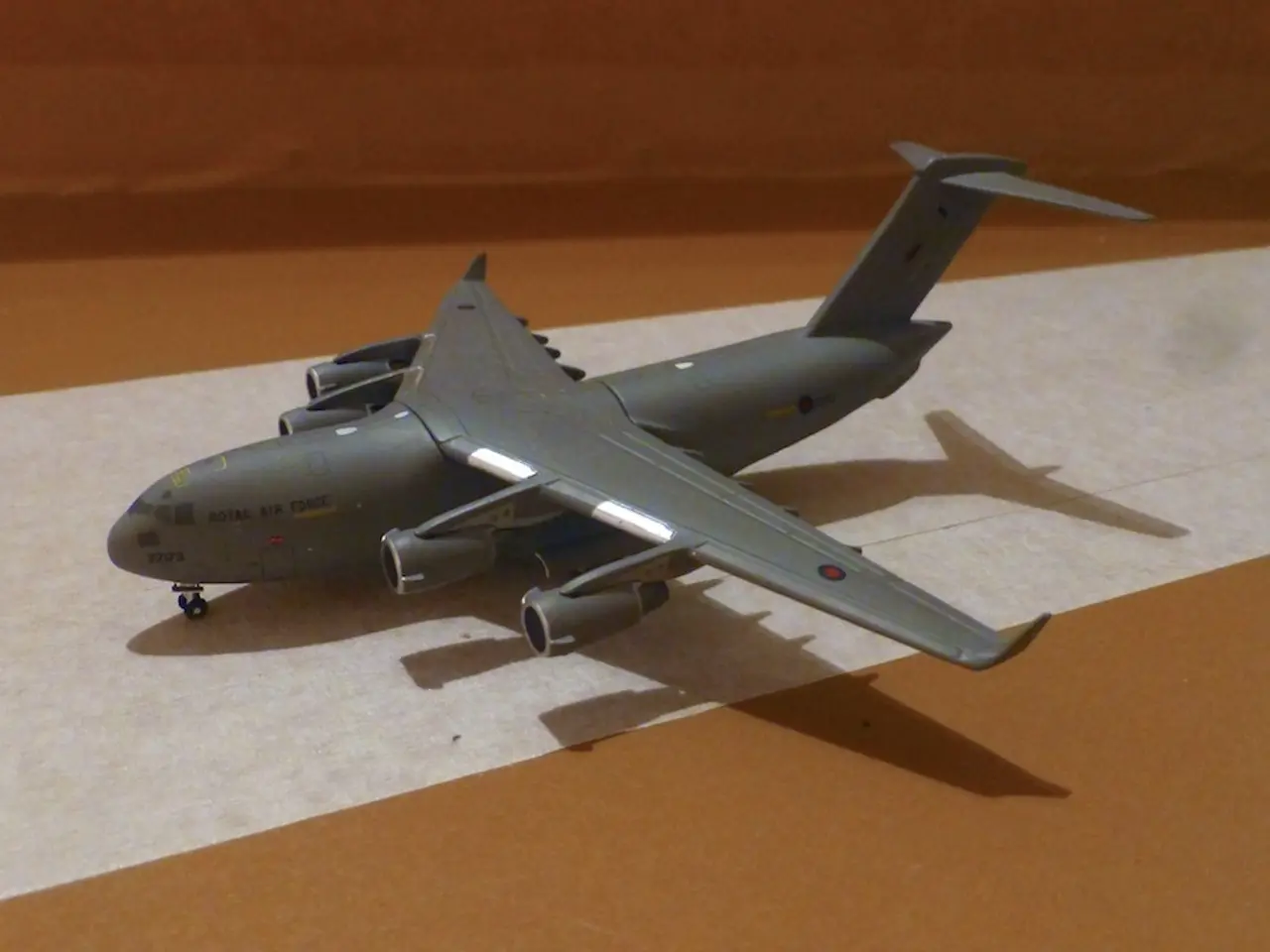
The CMMT-D, an unpowered glide vehicle, is designed to be launched vertically from pallets carried by cargo aircraft such as C-17s or C-130s using the Rapid Dragon system. It boasts a range of about 500 nautical miles and a targeted unit cost of around $150,000, significantly less than the cost of a high-end missile like the AGM-158 JASSM. The CMMT-D is intended for high-volume, low-cost cruise missile deployments compatible with fighters, bombers, and ground launchers. It was successfully tested at the Tillamook UAS Test Range in May 2025, demonstrating safe wing deployment and glide after pallet drop.
On the other hand, the CMMT-X is a smaller, motorized missile launched from pylons on aircraft, allowing greater launch flexibility. It was tested at the Pendleton UAS Range in June 2025, with successful separation, wing deployment, and powered flight. The "X" designation highlights its experimental status, aimed at being a modular, scalable air vehicle for missions ranging from strike to sensing.
Both versions share key features, including modularity, low cost, scalability, and compatibility with multiple air and ground launch platforms. Unlike traditional stealthy cruise missiles, the CMMT designs prioritize affordability and mass production, sacrificing stealth for volume and flexibility.
The CMMT system embodies the same general requirement as the Air Force's Family of Affordable Mass Missiles (FAMM) program: affordable, scalable cruise missile or missile-like air vehicles to saturate adversaries with massed effects. While explicit details on the FAMM itself are lacking, CMMT is conceptually aligned with the FAMM's goal to deliver affordable mass munitions, likely including variants optimized for different missions and platforms.
Lockheed Martin has been pursuing the concept of a low-cost cruise missile-type vehicle for some time to complement its high-end AGM-158 Joint Air-to-Surface Missile. The CMMT-X is the direct descendant of Lockheed Martin's 2020 "SPEED RACER" concept, which explores expendable-class systems. The company halved the usual time to go from concept to preliminary design review on the CMMTs, aided by previous work on SPEED RACER and digital techniques.
As the Air Force has not yet decided on the characteristics of Increment 2 of the Collaborative Combat Aircraft program, the flight-tested design and developed architecture of the CMMT could be quickly adapted for low-cost applications should the requirements move forward. The CMMT system is set to contribute significantly to the development of affordable, massed standoff strike capabilities.
- The Pentagon's interest in affordable, mass-produced missile technology is evident through the development and testing of Lockheed Martin's Common Multi-Mission Truck (CMMT) system.
- The CMMT-D, designed for high-volume, low-cost cruise missile deployments, can be launched from cargo aircraft like C-17s or C-130s, utilizing the Rapid Dragon system, and has a range of approximately 500 nautical miles.
- The CMMT-X, featuring greater launch flexibility due to its motorized missile design, was tested at the Pendleton UAS Range and has demonstrated successful separation, wing deployment, and powered flight.
- The CMMT system, sharing key features like modularity, low cost, scalability, and compatibility with multiple launch platforms, aligns conceptually with the Air Force's Family of Affordable Mass Missiles (FAMM) program, aiming to deliver affordable mass munitions for various missions and platforms.