
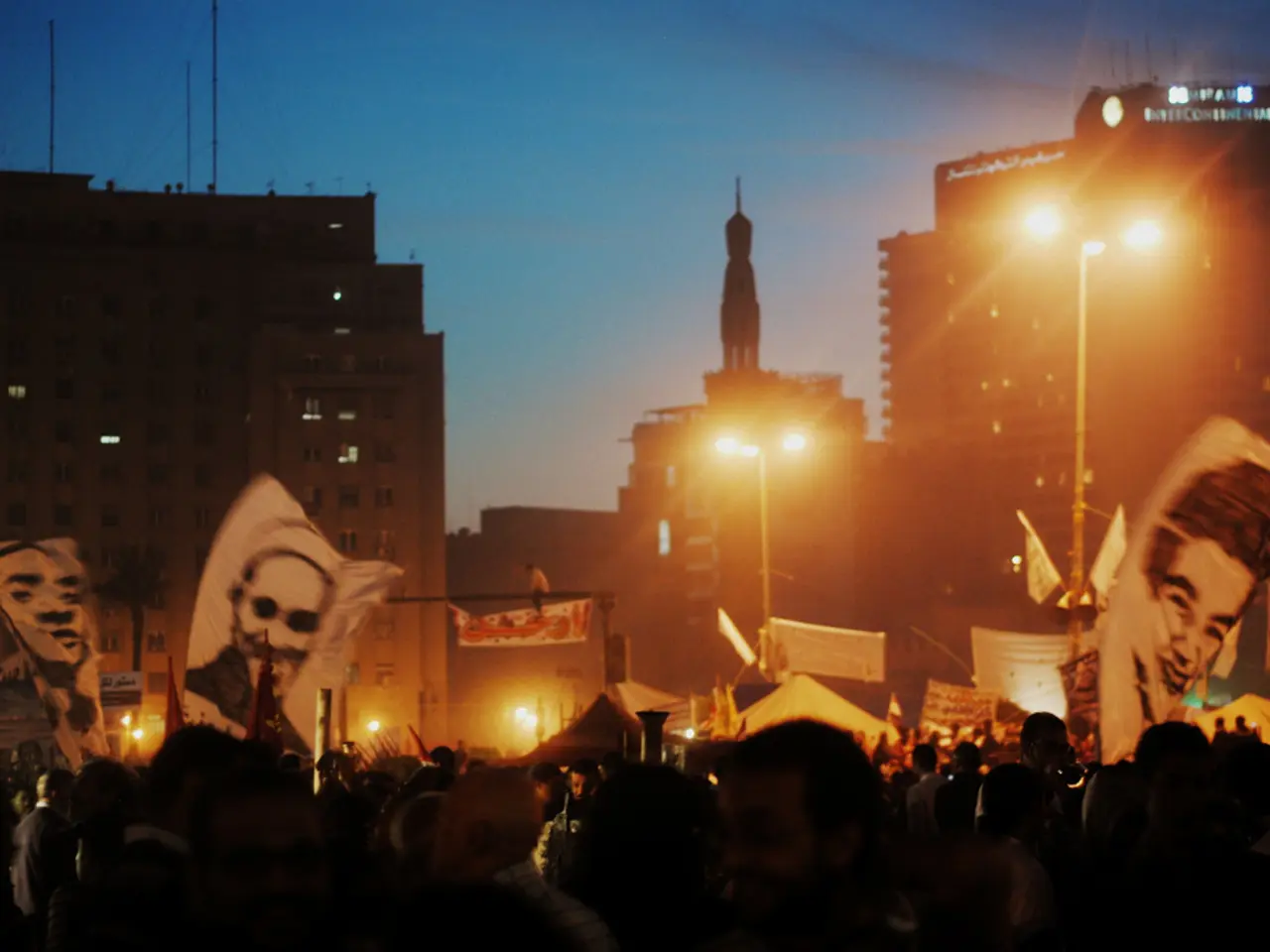
Public photography is becoming increasingly challenging, and it's evident that technology companies may be contributing to this issue
In the heart of downtown, the golden hour light bathes century-old buildings with ornate facades, a spectacle captured by the author's lens last Sunday morning. Yet, this peaceful scene was disrupted by an angry confrontation that has become all too familiar for photographers in public spaces.
The shift in public perception towards photographers has evolved dramatically over the years, from suspicious glances to occasional confrontations, and now to regular hostility. This transformation can be traced back to the rise of tech giants like Google, Facebook, and Apple, who have fundamentally altered how society views privacy and personal data since the early 2000s.
The tech giants' actions have conditioned the public to be suspicious of cameras, viewing a lens pointed their way as a threat. This fear and suspicion have potential consequences, as they may lead to a loss of authentic visual records of everyday life. Street photography, a craft that predates digital technology, is being compared to corporate surveillance empires.
Google's Street View, part of its mapping services, regularly captures candid images in public spaces. Legal cases such as the recent Argentine court ruling against Google—ordering the company to pay $12,500 to a man photographed naked by a Street View camera—highlight public sensitivity to being photographed without consent.
Platforms like Facebook and Instagram, which belong to or are influenced by these tech giants, have drastically changed how photography is perceived. The democratization of image sharing has blurred the lines between public and private, casual and professional photography, leading to a culture that both challenges and redefines customary norms about photographing people and places.
Apple and Meta, with their AI-driven applications that can access users' photo libraries and data without explicit ongoing consent, raise fears about personal images being used beyond their original context or control. The extensive data collection and AI utilization by these companies contribute to unease about who controls images taken in public or shared privately.
Future generations may have fewer authentic visual records of everyday life due to this climate of fear and suspicion caused by tech companies. Tech companies, who have violated trust and poisoned the well for privacy, face little to no consequences for their actions.
This incident is not the first time something like this has happened, but it was a surprise a couple of decades ago when people understood or accepted photographers in public spaces. The author's ritual when away includes wandering streets with a camera, documenting urban life and architecture. Yet, the fear of being confronted or accused of wrongdoing casts a shadow over these peaceful moments.
Images can be weaponized against individuals, as seen in instances like Street View, auto-tagging on social media, and license plate scanning. The loss of visual history is a potential consequence of these actions, as our future generations may be deprived of authentic glimpses into everyday life in our era.
This evolving landscape challenges traditional boundaries and compels ongoing public discourse about the limits of photography in public spaces. As we navigate this paradox, it is crucial to strike a balance between preserving our visual history and respecting privacy rights, consent, and data security.
[1] Source: https://www.nytimes.com/2010/05/24/technology/24google.html [2] Source: https://www.theatlantic.com/technology/archive/2013/01/the-democratization-of-photography/266401/ [3] Source: https://www.wired.com/story/apples-ai-scans-your-photos-without-asking-and-it-might-be-creepy/
- The increasing hostility towards photographers in public spaces can be linked to the rise of tech giants like Google, Facebook, and Apple, who have altered society's views on privacy and personal data since the early 2000s.
- The shift in public perception towards cameras has been significant, with a lens pointed at someone now viewed as a potential threat, a fear that stems from the actions of tech companies like Google, Facebook, and Apple.
- Street photography, a pre-digital technology craft, is being compared to corporate surveillance empires due to this heightened fear and suspicion.
- Legal cases, such as the Argentine court ruling against Google, highlight the public's sensitivity to being photographed without consent, a sensitiveness influenced by tech giants like Google.
- Social media platforms like Facebook and Instagram, influenced by tech giants, have blurred the lines between public and private, casual and professional photography, leading to a culture that challenges traditional norms about photographing people and places.
- Apple and Meta, with their AI-driven applications that access users' photo libraries and data without explicit ongoing consent, raise concerns about personal images being used beyond their original context or control.
- Future generations may have fewer authentic visual records of everyday life due to this climate of fear and suspicion, a consequence of the actions taken by tech companies who have violated trust.
- As we navigate this paradox, it's crucial to strike a balance between preserving our visual history and respecting privacy rights, consent, and data security, engaging in an ongoing public discourse about the limits of photography in public spaces.