Toyota's Kaizen Improvement Method Delivers Stunning Produce Yields on Rural Land
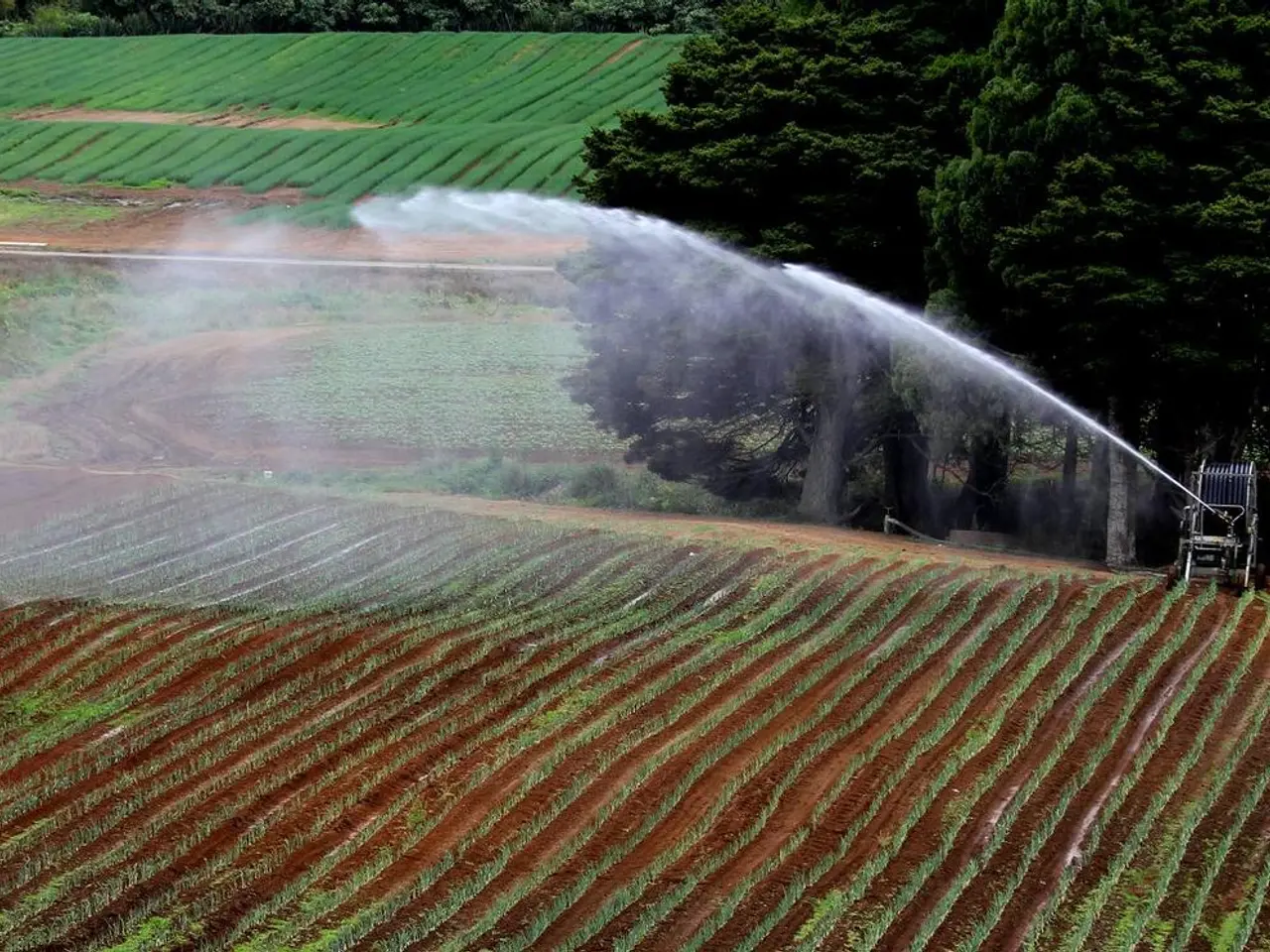
In the heart of Aichi Prefecture, the city of Yatomi has become a hub for agricultural innovation. Toyota, renowned for its production management methods and continuous improvement philosophy, has taken its expertise to the fields, aiming to boost agricultural productivity [1][4].
The project, led by Tatsuya Hirai, Senior Expert from Toyota's Agriculture & Biotechnology Business Division, focuses on applying the Toyota Production System (TPS) and the philosophy of kaizen (continuous improvement) to farming [6]. This approach aims to eliminate waste, improve efficiency, and enhance quality, mirroring Toyota's successful manufacturing processes.
One of the key components of this project is the development and deployment of advanced agricultural machinery. Smart electric tractors, equipped with wheel-side electric drive motors, battery ballast systems, and electro-hydraulic suspension, are revolutionizing farming operations [2]. These technologies, combined with TPS principles, lead to significant productivity gains by reducing energy consumption, decreasing slips, and improving traction efficiency.
Beyond the machinery, lean farming principles, inspired by TPS and kaizen, are being employed to minimize waste and improve operational efficiencies on farms. This parallels Toyota’s approach in manufacturing by streamlining workflows and continuously improving processes [3].
The project has brought about tangible improvements. Shovel storage organization was improved, reducing time wasted in searching for tools. Working hours in the drying process were halved, improving work-life balance for employees. Seedling waste was significantly reduced, freeing up greenhouse space for other crops. Seeding work was made easier with raised workbenches, reducing physical demands and preventing back pain [5].
President Kiharu Yagi of Nabehachi Nousan, one of the largest rice growers in Aichi Prefecture, initially met Toyota's offer with skepticism. However, after witnessing the improvements, she embraced Toyota's innovations, despite initial clashes of opinion [7]. A production schedule board was implemented, eliminating wasteful and unreasonable tasks and evening out inconsistencies in quality. White lines were introduced as a kaizen idea to visualize farm operations and facilitate improvements, a concept familiar to those familiar with Toyota's genba [8].
Toyota is also addressing concerns of local farmers using the TPS. The project emphasizes communication with farmers and making gradual improvements based on concerns and ideas from the farm [9]. A skill map was created to evenly distribute workloads, reduce risks, and develop employee talent.
In summary, Toyota’s approach to improving farming productivity applies its proven production management methods—TPS and kaizen—to the agricultural sector by fostering continuous improvement, leveraging smart farming equipment innovations, and adopting lean principles to make farming more efficient and sustainable [1][2][3][4].
- The continuous improvement philosophy (kaizen) from Toyota, known for its expertise in finance, business, and technology, is being applied to farming, aiming to bring productivity gains similar to those seen in the manufacturing sector.
- With the implementation of smart electrical tractors and lean farming principles inspired by Toyota's business approach, sports like rugby, basketball, or tennis might one day see equivalent improvements in productivity and efficiency, thanks to adaptations of the Technology Production System (TPS) and kaizen philosophy.